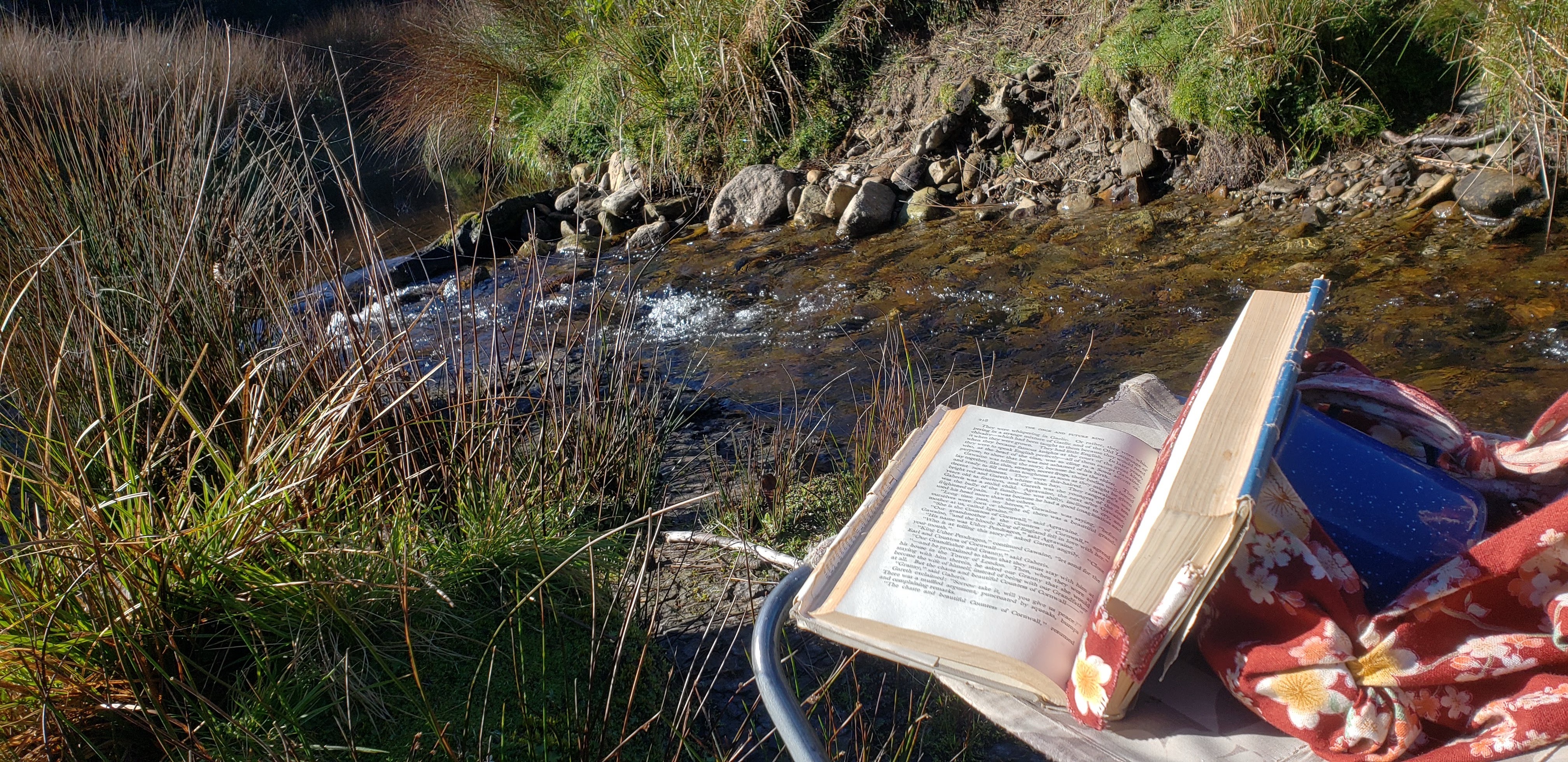
Want to get to know me better? Tired of making small talk with me? Here’s a thorough reading list.
The Little Prince
Antoine de Saint-Exupéry | 1943
Written in exile in New York while Saint-Exupéry’s France was under Nazi occupation. A classic for a reason.
It’s classified as a children’s book but I first encountered it at 16 (a formative time of life) and I’m glad I did. It reminds me to look outside of the sorts of games adults get caught up in and to be receptive to joy and beauty. I read it every time the world gets too heavy or complicated.
Vagabonding
Rolf Potts | 2002
I found this book during the same library trip I found The Little Prince. Vagabonding reframed travel for me as a philosophy rather than a vacation. Potts makes the case that long-term wandering isn’t a privilege reserved for the wealthy; it’s a choice available to almost anyone willing to rethink their relationship with time and money, and I have put this to the test several times. This is the book that made me question every assumption I had about how life was supposed to be structured, after having grown up largely on military bases.
Filled with practical tips and personal anecdotes and resources at the end of every chapter.
The Fall
Albert Camus | 1956
I found this book in the personal library of John “Jobin” Robin, in his off-grid forest home in Tasmania, where I was free to read about the depravity of man’s soul in the most pure, idealistic setting.
If you have read this book you might find it surprising that what I got from it was a reminder, again, that we must remember the dignity and humanity of others. Also, we must remember our own capacity for evil. After reading it I tend to contemplate my moments of evil and how I’ve been complicit in other ways.
Camus wrote this, his last completed novel, during the height of France’s war in Algeria. A former Paris lawyer holds court in an Amsterdam dive bar, confessing his sins in a one-sided monologue (the book is in 2nd person) that grows more unsettling with every page. One of the few books where I felt utterly bamboozled.
Deep Play
Diane Ackerman | 1999
What is play, why is it important, and how does it show up in our lives? Important to note: play isn’t just for children and it isn’t always fun. I was surprised and enthralled to read how religion is a form of important, non-childish transcendent play. If you are familiar with the concept of “flow”, this book is a natural companion to that. An exploration of the importance of transcendental moments where on experiences the “loss of self”, such as when you “lose yourself” in a book, or the process of making art, or when you’re gazing at awe-inspiring scenery, or even when you’re playing pretend with a toddler.
This book forces me to examine my priorities and organize them in accordance with a vibrant, meaningful existence. It also reminds me to look at the water I’m swimming in, by which I mean the current cultural obsession with optimization, efficiency, and productivity.
Ordinary Men
Christopher R. Browning | 1992
Browning’s meticulous history examines Reserve Police Battalion 101 which was composed of middle-aged men, not ideological fanatics, who became mass killers in occupied Poland. Using detailed postwar testimony, he traces how ordinary social pressures, obedience, and incremental desensitization transformed unremarkable civilians into perpetrators of genocide. Something we’re all capable of.
I use it as a reminder of every person’s capacity for evil. Maybe I should specify that I don’t believe that humanity is evil by default, but I do believe that it is easy to slip, unwittingly, into it.
It also sharpens my own definition of evil, which is “the forgetting of the dignity and humanity of others.” This extends to non-human entities as well. Just remove the “humanity” bit.
Recommended reading after this includes This Way for the Gas, Ladies and Gentlemen by Tadeusz Borowski (short, prose-filled fiction of concentration camp life) and Hanna Arendt’s Eichmann in Jerusalem:A Report on the Banality of Evil.
Vita Contemplativa
Byung-Chul Han | 2022
An argument for the kind of life I aspire to live: a life that has space for true leisure and play. Han puts it all so much more elegantly and thoroughly than I have been able to do so far. This book had me nodding and saying “yes… YES!” repeatedly.
“Han writes from within a hypercapitalist moment that has turned busyness into a moral virtue and rest into something that requires justification, and his pushback is both philosophical and urgent. Drawing on thinkers from Aristotle to Nietzsche, he argues that contemplation isn’t laziness. It’s the condition that makes genuine thought, beauty, and freedom possible.”
Recommended reading includes the rest of Byung-Chul Han’s works.
The Once and Future King
T.H. White | 1958
A beautiful rendition of the Arthurian story, following King Arthur from his modest beginnings all the way to the end. What I love is how the tone of the writing shifts as Arthur grows up. When he’s a child, it almost reads like a children’s story, like how The Hobbit is to The Lord of the Rings Trilogy. But as Arthur ages and comes into contact with more adult and nuanced problems, the writing develops to match. The artful humanization of these mythical characters is heartbreaking and relatable.
How to Know a Person
David Brooks | 2023
A diagnosis and an antidote to the “loneliness epidemic” declared in 2023 by the U.S. Surgeon General. Brooks argues that the most important skill we’ve largely stopped practicing is the ability to truly see another person, to make them feel understood rather than just observed.
Reading this book forces me to examine the ways I objectify and fail to see the people right in front of me, and inspired me to take action to help appreciate others the way they should be.
Calvin and Hobbes
Bill Watterson | 1985–1995
The best newspaper comic strip in all history, in my humble opinion. It follows a young boy named Calvin who totes around his stuffed tiger Hobbes on charming, boyish adventures, while brushing up against big questions about humanity and what it costs to “grow up”.
The author famously refused to license his characters, which I admire as an act of artistic integrity.
East of Eden
John Steinbeck | 1952
I have never been kept so enthralled by a book that’s so long since my binge-reading days of middle school. Steinbeck called this his magnum opus, and I can see why.
Built around the biblical story of Cain and Abel, it hinges on the Hebrew word timshel, “thou mayest”, a translation that insists on human agency rather than destiny or commandment. Every character is someone you could have met before, however human or monstrous. I have a particular soft spot for Lee. This book tackles a philosophical question that I am often wrestling with (agency, free will, etc).
Meditations
Marcus Aurelius | c. 161–180 AD
Never intended for publication and still relevant nearly 2000 years later. One of the pillars of Stoicism. I read this book at least once a year, sporadically, over time. Stoicism gets a bad rap sometimes but it has been incredibly helpful in shaping my approach to life.
The Waste Land
T.S. Eliot | 1922
Read it once for confusion, again with the notes, and a third time just to let the sounds flow in their odd, fragmented cadence. I have always loved Eliot’s poetry and this one in particular read like a puzzle to me. I spent a long time digging into the allusions and was delighted by how endless and deep they were.
It speaks to a more private side of myself, which is more cynical than many of my friends might imagine my interior to be. But I remain more optimistic than this poem suggests Eliot was.
Art and Fear
David Bayles & Ted Orland | 1993
A book about how the real obstacles to making art have almost nothing to do with talent and everything to do with fear, doubt, and the gap between what you envision and what you can actually execute. It’s less a self-help book than an honest conversation.
Even though it’s “art” and fear, I apply the concepts of the book to any kind of vision I want to execute, artistic or otherwise. It helps me get out of any ruts of complacency or self doubt.
Final Thoughts :)
After compiling this list I noticed a few things.
At first I thought I was concerned with “being a better person” but perhaps a better question is: what is the cost of integrity, and am I paying the price?
Also, I am self-conscious about appearing “lazy” or “unproductive” through my inclusion of Deep Play and Vita Contemplativa, but I hope you read them.
The question of evil is important to me (Ordinary Men, The Fall). At one point in my life I didn’t believe it exists, that the human world is largely uncaring and indifferent rather than evil (which it can still be), but now I do believe in evil, and I believe it’s that exact indifference that gives it away. Can nature outside of humanity be evil? I lean towards no.